

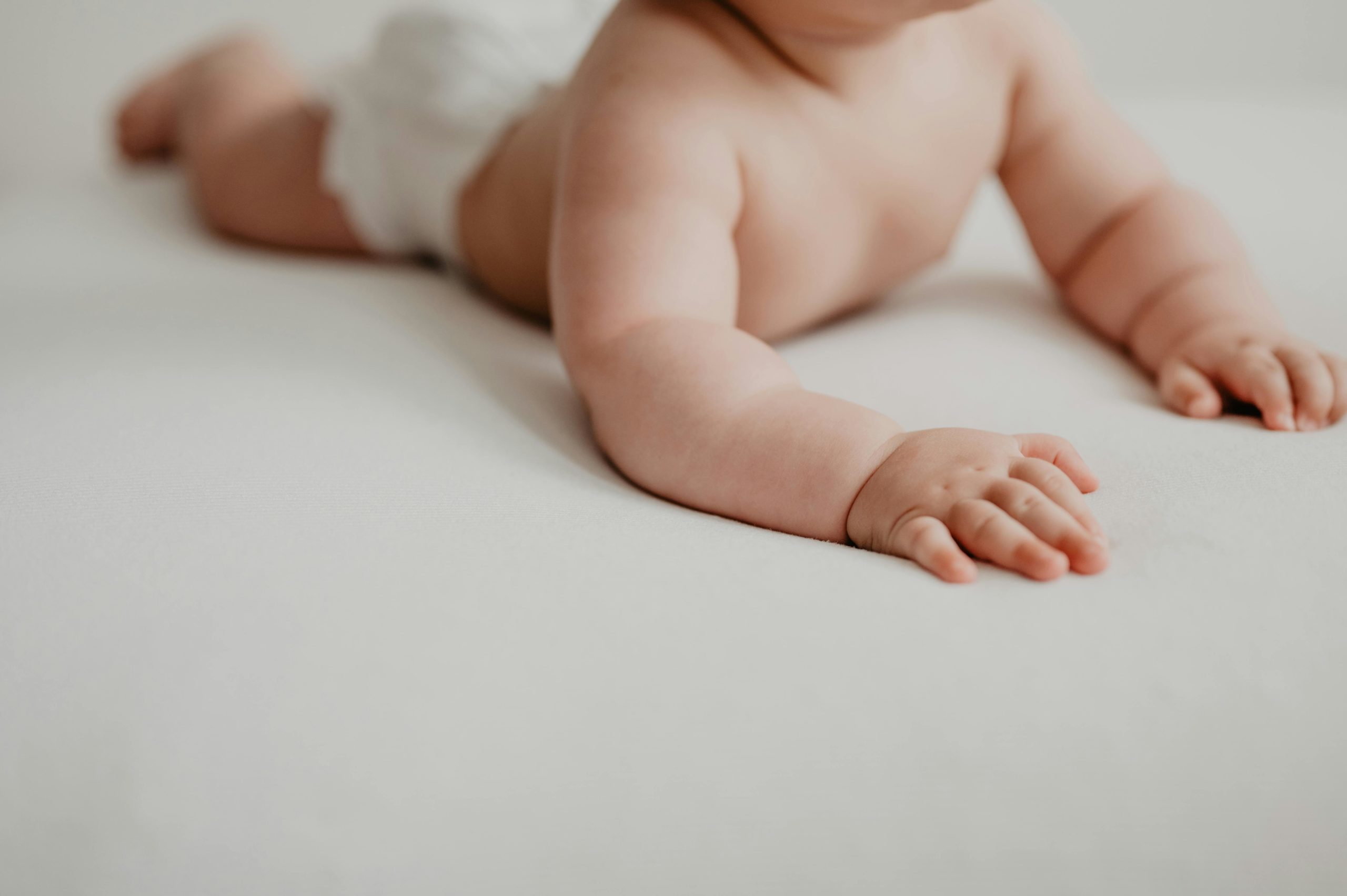
04 Feb Benefits of Crawling and Why it Should be Encouraged
Crawling offers many important benefits for babies, supporting their physical, cognitive, and emotional development.
🧠 Brain & Cognitive Development
- Builds coordination between both sides of the brain, which supports problem-solving, reading, and writing later on.
- Improves spatial awareness as babies learn where their bodies are in space.
- Enhances focus and planning skills as babies figure out how to move toward a goal.
💪 Physical Development
- Strengthens muscles in the arms, legs, shoulders, neck, and core.
- Improves balance and posture, laying the foundation for sitting, standing, and walking.
- Develops hand and wrist stability, which is important for fine motor skills like writing and self-feeding.
👀 Sensory & Visual Skills
- Supports depth perception and visual tracking by changing viewpoints and distances.
- Improves hand–eye coordination as babies reach and move at the same time.
- Provides sensory input through touch, movement, and pressure.
🚶 Motor Skill Foundation
- Encourages cross-body movements, important for coordinated walking and running.
- Helps with transitions (rolling → sitting → crawling → standing).
- Builds confidence in movement and body control.
😊 Emotional & Social Benefits of crawling
- Promotes independence as babies can explore on their own.
- Boosts confidence and curiosity by allowing exploration.
- Supports problem-solving and perseverance when navigating obstacles.
Not all babies crawl the same way (some scoot, roll, or crawl differently, such as janky crawl with one leg up), and some skip crawling entirely and still develop normally. Crawling often appears between 6 and 10 months, but some babies skip crawling and move straight to standing and walking. However, it helps so many areas that it should be encouraged to help achieve other milestones and development
🩺 When should you see a paediatric physio for crawling?
It’s a good idea to book an assessment if your baby:
- Doesn’t tolerate tummy time at all by 5–6 months
- Seems very stiff or very floppy
- Uses only one side of their body consistently
- Cannot sit without support by 7–8 months
- Shows little interest in movement by 9 months
- Has lost skills they previously had
- Was born prematurely and seems significantly delayed (adjusted age matters) to learn how to help them gain the skills for missed or delayed milestones
📆 Booking in for a crawling assessment with Western Paediatric Physio
Early evaluation doesn’t mean something is wrong—it just ensures support if needed and guidance on why they aren’t meeting milestones like crawling and how to help them meet them.
If something doesn’t feel quite right, a paediatric physiotherapy assessment can offer clarity and reassurance. Our team of experienced physiotherapists will work with you to understand how your child is moving and identify any challenges.
To make an appointment, contact our friendly reception team on (03) 8001 2042 or book online.
Sorry, the comment form is closed at this time.